Conditions & Care
Period Underwear for PCOS, Endo, Sensitive Skin & UTIs
By Ashley Bolohan · April 27, 2026 · 11 min read
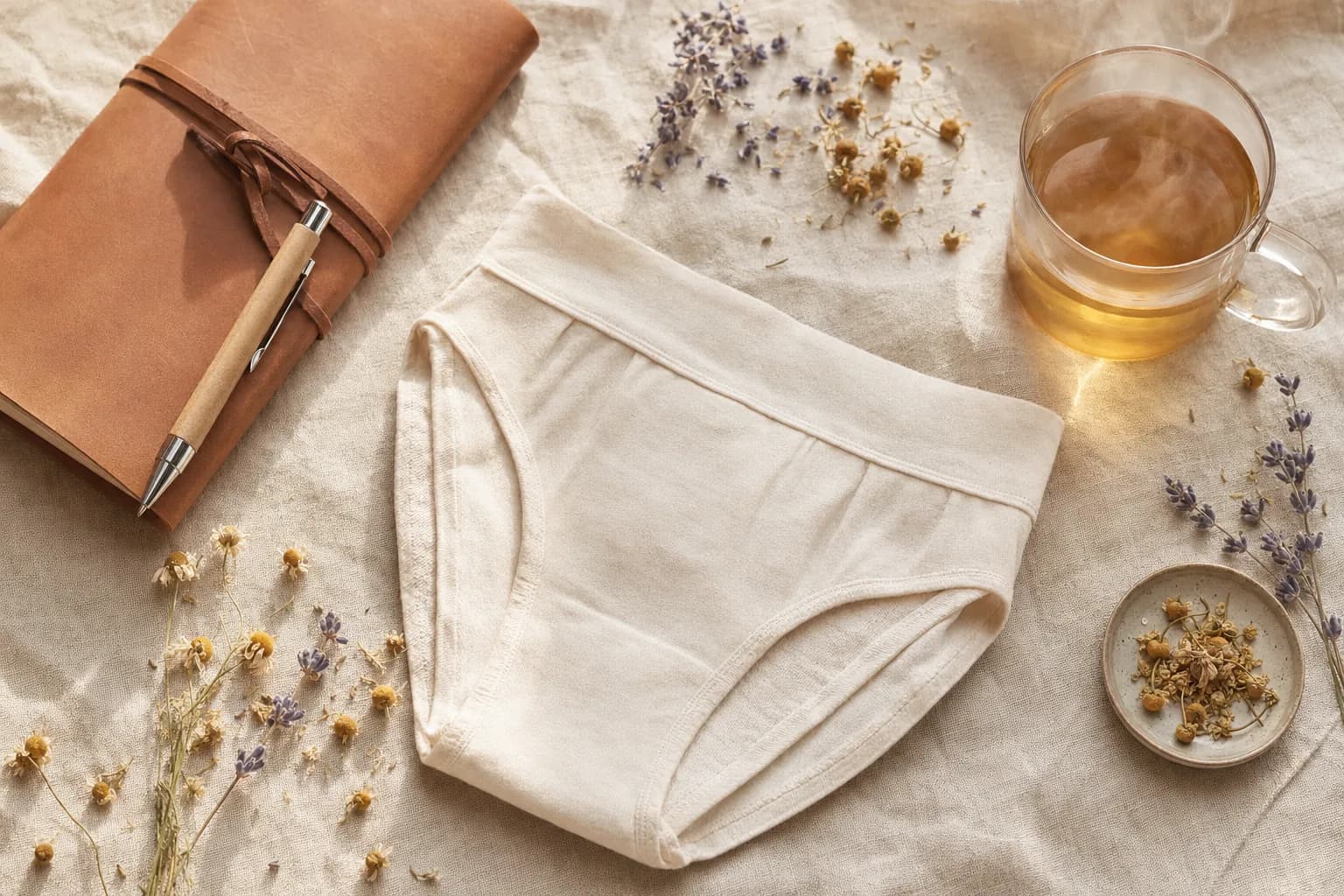
Most period-underwear marketing isn't written for someone managing a chronic condition. It's written for someone with a normal cycle who wants a lower-waste alternative to tampons. That's a perfectly fine person to write for — but it leaves out the audience that pays the closest attention to what touches their body, because they have to.
This guide is for the audience the marketing skips: women with PCOS, endometriosis, recurring UTIs, or chronic vulvar sensitivity, looking for an honest read on whether and how period underwear fits into the plan you already have with your doctor. It's not a treatment pitch. None of these conditions are cured by switching underwear. But several have a meaningful "what touches your skin" component, and underwear is one of the few variables you actually control.
Below: the shared physiology, then a section per condition with what the clinical literature says and what to look for in a brief.
The short version
- Underwear isn't a treatment. It's a modifiable variable that affects the local microclimate against vulvar skin — moisture, temperature, friction, and fabric chemistry.
- Cotton matters because cotton is hydrophilic — it absorbs moisture and releases it slowly, keeping the area drier and cooler than synthetics, which trap surface humidity. ACOG has recommended cotton underwear for routine vulvar care for decades.
- Chemistry matters as much as fiber. A "cotton" brief with formaldehyde-finished waistband elastic, azo dyes, or a fluorinated gusset is doing more harm than good for sensitive skin. Look for GOTS (organic + restricted chemistry from farm to garment) and OEKO-TEX STANDARD 100 Class I (the chemistry class used for clothing made for infants).
- For period underwear specifically: the gusset is the part that matters most. A PFAS-free leakproof layer with cotton on both sides means the skin contact surface is still cotton on heavier days.
- High-rise + soft waistband + no compression is the combination most often recommended for PCOS bloat days, endometriosis flares, and post-procedure comfort.
- HSA/FSA-eligible for the period brief under current IRS guidance, though plan administrators have discretion.
Why what touches the vulva is a real lever, not a nice-to-have
The vulva is one of the most metabolically active and one of the most sensitive zones of skin on the body. Several things make it different from skin elsewhere:
- Higher hydration baseline. Mucocutaneous tissue near the vulvar vestibule retains more water than typical skin. That makes it more permeable to topical chemistry — including residues that wash off most other clothing without a thought.
- Active microbiome. The healthy vulvovaginal flora is dominated by Lactobacillus species (mostly L. crispatus and L. iners) that produce lactic acid and keep local pH around 3.8–4.5. The flora is sensitive to changes in temperature, humidity, and fabric chemistry.
- Folds and friction. The labia create skin-on-skin and skin-on-fabric friction surfaces that don't exist most places. A scratchy waistband or a synthetic gusset that doesn't breathe makes itself felt fast.
- Cyclical hormonal changes. Estrogen, progesterone, and androgens all shift across the menstrual cycle and across life stages, and they change how the skin responds to friction, moisture, and chemistry. Sensitivity is not constant.
What this means in practice is that "wear cotton underwear" — the line on every patient handout — isn't a placebo recommendation. It's an acknowledgment that the vulvar microclimate is a small but real input variable in conditions where the local environment matters.
PCOS
Polycystic ovary syndrome affects an estimated 6–12% of women of reproductive age in the U.S., per the CDC. The typical clinical picture combines hyperandrogenism, ovulatory dysfunction, and insulin resistance — and shows up day to day as cycle unpredictability, longer cycles, breakthrough bleeding, and a higher baseline rate of pelvic discomfort.
For underwear specifically, three patterns come up over and over in PCOS communities:
- Cycle unpredictability means your period sometimes starts when you weren't expecting it. Period underwear is the cleanest backup answer to this — wearable as everyday underwear, ready when your period is two days early or two weeks late.
- Insulin-related skin changes increase friction sensitivity. Insulin resistance correlates with higher rates of vulvar acanthosis nigricans, intertrigo (rash in skin folds), and irritation from synthetic fabrics. Cotton against the skin reduces friction-mediated irritation.
- Bloat days are real. A high-rise brief with a soft, non-compressive waistband sits above the bloat line rather than digging into it. Compression bands at the natural waist cause the most complaints in PCOS communities; high-rise without compression sidesteps the issue.
PCOS isn't an inflammatory or microbial condition primarily, so the cotton recommendation here is about comfort, friction, and the practical reality of unpredictable periods — not microbiome management. That said, women with PCOS are at higher risk for vulvovaginal candidiasis (the metabolic context favors Candida overgrowth), so the same fabric reasoning that applies to anyone managing recurring yeast applies here too.
Endometriosis
Endometriosis affects an estimated 10% of women of reproductive age — endometrial-like tissue growing outside the uterus, on the ovaries, fallopian tubes, peritoneum, and sometimes other pelvic and abdominal organs. The defining clinical experience is cyclic pelvic pain, often severe, often with heavy menstrual bleeding (menorrhagia) and dysmenorrhea that don't respond to over-the-counter analgesics.
Underwear isn't going to touch endometriosis biologically — surgery, hormonal therapy, and pain management are the medical levers. But the day-to-day quality-of-life conversation in endo communities centers on three underwear-related themes:
- Backup absorbency for heavy bleeding. Period underwear isn't a medical absorbency replacement for menstrual cups or pads on heavy flow, but as backup under another product on heavy days, or as primary on lighter days, it removes the constant low-grade anxiety about leaking through to clothing.
- Comfort during pelvic pain flares. A high-rise brief with a soft waistband doesn't add pressure to a tender abdomen the way a low-rise band sitting on the lower abdomen often does. Many endo patients describe high-rise as the only band height they tolerate during flares.
- Post-laparoscopy comfort. After laparoscopic endo excision (the standard surgical treatment), patients have small port incisions across the lower abdomen. A soft, high-rise band sits above the incisions and protects the surgical sites from friction; conventional low-rise underwear sits directly on them.
If you're choosing period underwear with endometriosis in mind, the criteria to weight heaviest are: high-rise cut, soft non-elastic-feeling waistband, cotton against the skin (not synthetic), and absorbency calibrated for backup or light-to-moderate days. For heavy-flow days, our period brief is designed as backup — not a stand-alone replacement.
Sensitive skin & vulvar dermatitis
Vulvar contact dermatitis is one of the most common diagnoses at vulvar specialty clinics. The triggers are usually cumulative and chemical: fragranced soaps, synthetic dyes in clothing, formaldehyde-releasing fabric finishes, residue from harsh laundry detergent, and — increasingly recognized — fluorinated water-resistance treatments on intimates.
If you've ever had a patch of irritation, itching, or burning that you couldn't tie to an obvious infection, the chemistry of what's against your skin is a good first place to look. The framework that works is:
- Eliminate fragrance and dyes. Choose unfragranced detergent, undyed or naturally-dyed fabrics, no scented period products.
- Eliminate finished synthetics. That means no formaldehyde-finished waistband elastic, no azo-dyed lycra, no fluorinated water-resistance treatment in any layer the skin contacts.
- Verify with a certification you can read. GOTS restricts the chemistry from farm through finish — no PFAS, no formaldehyde, no chlorine bleach, no glyphosate, restricted azo dyes. OEKO-TEX STANDARD 100 Class I screens the finished fabric for over a thousand chemicals at consumer-relevant exposure levels, calibrated for clothing made for infants.
- Patch-test. Wear one new piece for a day before committing to a multi-pack. Even with the right certifications, individual sensitivities exist.
If you have a diagnosed vulvar dermatosis — lichen sclerosus, lichen planus, chronic eczema, or contact dermatitis from a known allergen — talk to your dermatologist or vulvar specialist before changing anything. They may have specific fabric-finish exclusions to add to the framework above.
Recurring UTIs
Recurrent urinary tract infection — generally defined as ≥ 2 culture-confirmed UTIs in 6 months or ≥ 3 in 12 months — is one of the most frustrating chronic conditions in women's health, partly because the standard treatment (antibiotics) carries a recurrence rate of around 25% within six months of a single infection. The microbiology is complex; the prevention conversation focuses on modifiable behaviors that reduce uropathogen colonization and ascension.
ACOG and the American Urological Association both list "wear cotton underwear" in their patient guidance for recurrent UTI prevention. The mechanism is the same we've been talking about: cotton keeps the perineal area drier and cooler, which is less friendly to E. coli (the cause of ~80% of community-acquired UTIs in women) ascending from the perianal region to the urethral meatus. Add to that:
- Avoid synthetic gussets that trap moisture — same logic, applied to the surface specifically in contact with the urethral area.
- Change out of wet swimwear or workout clothes promptly. Same physics: prolonged wet contact against vulvar skin shifts the microclimate toward conditions that favor pathogen growth.
- Front-to-back wiping, adequate hydration, urination after intercourse — the standard list.
For period underwear specifically: if you're prone to recurrent UTIs, the gusset is the part that matters. A cotton-faced gusset (cotton against the skin), backed by a non-fluorinated waterproof layer, is the safest choice. We make this explicit in our published PFAS lab reports for every batch — both because PFAS in apparel is its own harm conversation and because the chemistry that makes a gusset waterproof in the wrong way is the chemistry that's most likely to flare sensitive perineal tissue.
The shared answer
Across all four conditions, the answer is the same shape: high-rise cotton, soft waistband, no synthetic gusset, no compression at the natural waist, with chemistry verified by GOTS + OEKO-TEX and a published per-batch PFAS lab test. That's not coincidence. It's the configuration the clinical literature has been pointing at for vulvar care generally for decades, applied to a specific product category.
If you want the deeper read on why fabric choice matters, organic cotton vs synthetic period underwear goes into the moisture and microbiome physics. If you want to know what to actually look for in a brand's "PFAS-free" claim — and whether anyone is publishing the receipts — the PFAS guide is the starting point.
Where WOVAE sits
Both WOVAE briefs are 95% GOTS-certified organic cotton, 5% elastane, OEKO-TEX STANDARD 100 Class I tested, sized XS through 2XL, high-rise, no compressive waistband. The period brief has a four-layer gusset — cotton wicking, absorbent core, PFAS-free leakproof layer, cotton facing — designed for spotting, light-to-medium days, and as backup on heavier days. The period brief is HSA/FSA-eligible under current IRS guidance for period care products (eligibility ultimately depends on your plan administrator).
Every batch is independently lab-tested for PFAS at SGS Hong Kong using both total organic fluorine and a targeted PFAS panel; the lab's PDF goes on the site at /lab-results with the batch number, test date, and the technician's signature visible.
We won't claim our underwear treats anything. We will claim that the chemistry is right, the fit is engineered for the conditions described above, and the receipts are published.
Last updated April 27, 2026. Sources: CDC PCOS resources, Endometriosis Foundation of America patient guides, American College of Obstetricians and Gynecologists vulvar care + recurrent UTI patient guidance, American Urological Association recurrent UTI guidelines, Foxman 2014 (Infect Dis Clin North Am), Sobel et al. on vulvovaginal candidiasis, IRS guidance on HSA/FSA eligibility under the CARES Act of 2020.
Frequently asked
Can underwear actually affect PCOS, endometriosis, or UTIs?
Underwear isn't a treatment for any of these conditions and we wouldn't pretend otherwise. What it does is change the local microclimate against vulvar skin — moisture, temperature, fabric chemistry, and the friction surface — and several clinical bodies (ACOG, the AUA) treat that microclimate as one of the modifiable variables in chronic vulvovaginal symptoms and recurrent UTI prevention. So underwear is a small, controllable lever that sits alongside diet, hormones, and any treatment plan from your provider.
Why does cotton specifically matter for these conditions?
Cotton is hydrophilic — it absorbs moisture into the fiber wall and releases it through evaporation, keeping the skin against it drier and the local temperature closer to body baseline. Synthetic fabrics (polyester, nylon) are hydrophobic; they trap surface humidity, which raises temperature and creates a wetter microclimate that yeast and certain bacteria prefer. The American College of Obstetricians and Gynecologists has recommended 100% cotton underwear for routine vulvar care for decades for exactly this reason. For people managing PCOS, endometriosis, or recurring UTIs — all conditions where vulvar irritation or microbiome disruption can flare — that's not a small detail.
Is the WOVAE period brief HSA/FSA eligible?
Yes — under current IRS guidance, period care products including absorbent period underwear are eligible for purchase with HSA and FSA funds. That said, eligibility ultimately depends on your specific plan administrator's interpretation, and we don't guarantee reimbursement. Save the receipt; if your plan questions it, the IRS guidance citation is in the CARES Act of 2020.
I have severe vulvar sensitivity / lichen sclerosus / chronic dermatitis — is period underwear safe?
Talk to your dermatologist or vulvar specialist before changing anything. As a general rule, what tends to flare sensitive vulvar skin is residue from synthetic dyes, formaldehyde-finished fabrics, fragrance, and fluorinated water-resistance treatments — none of which are present in a GOTS-certified, OEKO-TEX STANDARD 100 Class I cotton brief with a PFAS-free gusset. But sensitivity is individual, and we'd rather you patch-test (wear one for a day with the tag in your hand for a quick return) than guess.
Will period underwear replace tampons or pads?
For some people on lighter days, yes. For most, it works as a backup or as primary on light-to-moderate days. Our period brief is designed for spotting, light-to-medium days, and as backup to other products on heavier days — it's not a medical-absorbency replacement for tampons or pads on heavy flow. The pillar is fewer disposables, not zero.
Stay in the loop